
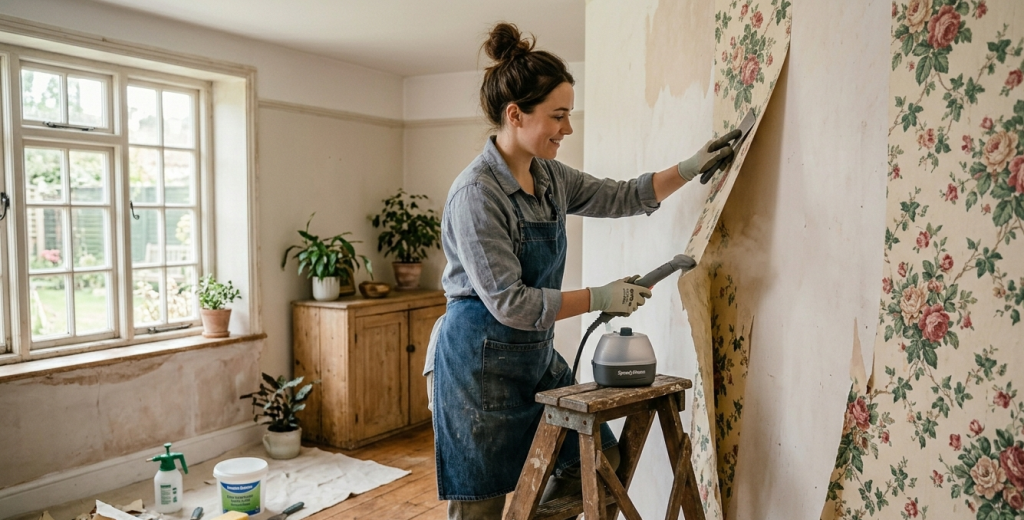
The best way to remove wallpaper starting right collecting what you need before peeling begins, since taking time shapes success as much as any scraper or sponge. Facing walls dressed in old designs often stresses people out significantly. Still, a step-by-step method leads to clean results every single time. Follow these steps closely to avoid harming the wall surface beneath the old paper. Clearing the area comes first: shift furniture away and lay down sheeting to guard the floor. Once that step is done, start removing wallpaper to prepare for new paint. Before long, the space takes on a clean, updated appearance. You will feel a great sense of pride once the task is finished. Transforming a room begins with this essential first step toward a modern home.
Get Your Space Ready for the Best Way to Remove Wallpaper
Start by removing anything precious from the space entirely to avoid any accidents. That way, splashes and grit won’t damage belongings during the messy work. Plastic sheets go up next, sealed with tape at floor edges to trap runoff. Once barriers are set, power to the area gets switched off for safety. Start by shielding the outlets because tape works best for this specific task. That way, spills stay clear of electrical parts throughout the entire process. Getting things set up right makes removing wallpaper go much smoother for everyone. With everything else out of the way, attention lands only on the surfaces. Floor coverage matters just as much; leave no spot bare at all. This thoughtful arrangement helps avoid costly harm to your elegant wood floors or carpeting. To finish, collect every scraper and bucket near one main area.
Score the Surface Gently
Start by scoring the paper lightly with a tool designed for making small perforations. Moisture needs these openings to activate the adhesive beneath the decorative top layer. Still, pressing hard against the wall requires care to avoid cutting too deeply. If force is excessive, it may harm what lies beneath, scarring plaster or drywall surfaces. Later, the removal solution works faster through the coating than earlier attempts did. When figuring out how to remove old wallpaper, this step tends to matter a lot. That means patience helps while roughening every section of the room.
Use the Stripping Solution as the Best Way to Remove Wallpaper
How to remove old wallpaper start by combining warm water with liquid fabric softener in a mixing bowl. Another option is picking up a ready-made removal agent at your neighborhood home improvement shop. Apply the blend to one limited patch of wall surface before moving on. After that, wait no less than a quarter hour while the fluid breaks down. This quiet waiting matters most for the best way to remove wallpaper effectively. When sheets stay too dry, sticky layers refuse to let go of the plaster underneath. So, it helps to mist the area lightly during pauses between steps. Slowly, edges rise up like peeling paint on a sunlit porch in summer.
Apply Putty Knife – Best Way to Remove Wallpaper
Start by gently scraping once the paper turns soft from the moisture. A shallow tilt of the blade helps protect the surface beneath from nicks. Large sections often lift easily after soaking in the warm solution. Yet some areas resist, needing more moisture before they release from the wall. When resistance happens, pause scraping and add extra solution without any delay. Start slow when peeling off old paper patience keeps plaster safe. A steady rhythm across hours protects what lies beneath. Progress comes section after section until nothing remains but clean wall. Step by step completes the job right.
Tackle the Tough Adhesive
Start slow when peeling off old paper – patience keeps plaster safe. A steady rhythm across hours protects what lies beneath. Progress comes section after section until nothing remains but clean wall. Step by step completes the job right. Warm water poured slowly helps soften what remains of the stubborn glue. A damp scrub sponge works well when moving in small circles across the surface. Soap mixed into water makes rinsing simpler afterward for a clean finish. Smooth results start when residue is fully removed before any painting begins. Because of this, surfaces stay free from hidden grime that could spoil the look. A little added effort now avoids cracked or lifting layers later on. For stubborn areas, try using a targeted cleaning gel instead of regular soap.
Sand and Prep Walls
Once the walls have dried, take a moment to check for tiny flaws. Where needed, gently rub down leftover adhesive or paper using fine sandpaper. A flawless base emerges when these details are handled carefully by the homeowner. Peeling away the top layer usually leaves gummy spots stuck to the wall. With that in mind, effort turns to clearing out leftover adhesive from old paper. A clean result like this makes the best way to remove wallpaper truly effective. At last, the space offers an open starting point for your creativity. Finish by removing leftover particles using a soft microfiber fabric.
Conclusion
In conclusion, working slowly often works best way to remove wallpaper. Moisture helps lift the material, especially where corners resist pulling free. Using a cloth soaked in water softens thick sections before scraping begins. The tool glides easier once fibers absorb enough liquid. Progress shows even if only small patches come off at first. Some spots need repeated wetting, others give way quickly. Walls underneath stay intact when pressure stays light. Days may feel unproductive, still changes appear upon closer look. Fresh paint adheres better once every trace of fade has completely disappeared from the plaster. Confidence grows alongside the empty spaces waiting for new color or texture. Start by wiping down each tool, then toss the used paper where it belongs.